



Rail Depot Maintenance Tool Digitization
This narrative is a composite scenario and does not name any specific operator. It focuses on a depot maintenance crib: upgrading paper logs into automated records of who took what and when—supporting handovers and cycle counts under safety rules.
Challenge
Crews run in multiple rotating shifts. Insulated wrenches, torque wrenches, and specialty sockets are high-value and easy to confuse; paper sign-out logs were often missed or wrong. Leads had limited time at handover to confirm critical tools were back, and manual checks were slow with weak historical trace.
Existing systems centered on rolling stock and work orders, not a single view of last handler and physical location. Finding exceptions relied on tribal knowledge, slowing night-time recovery.
Solution
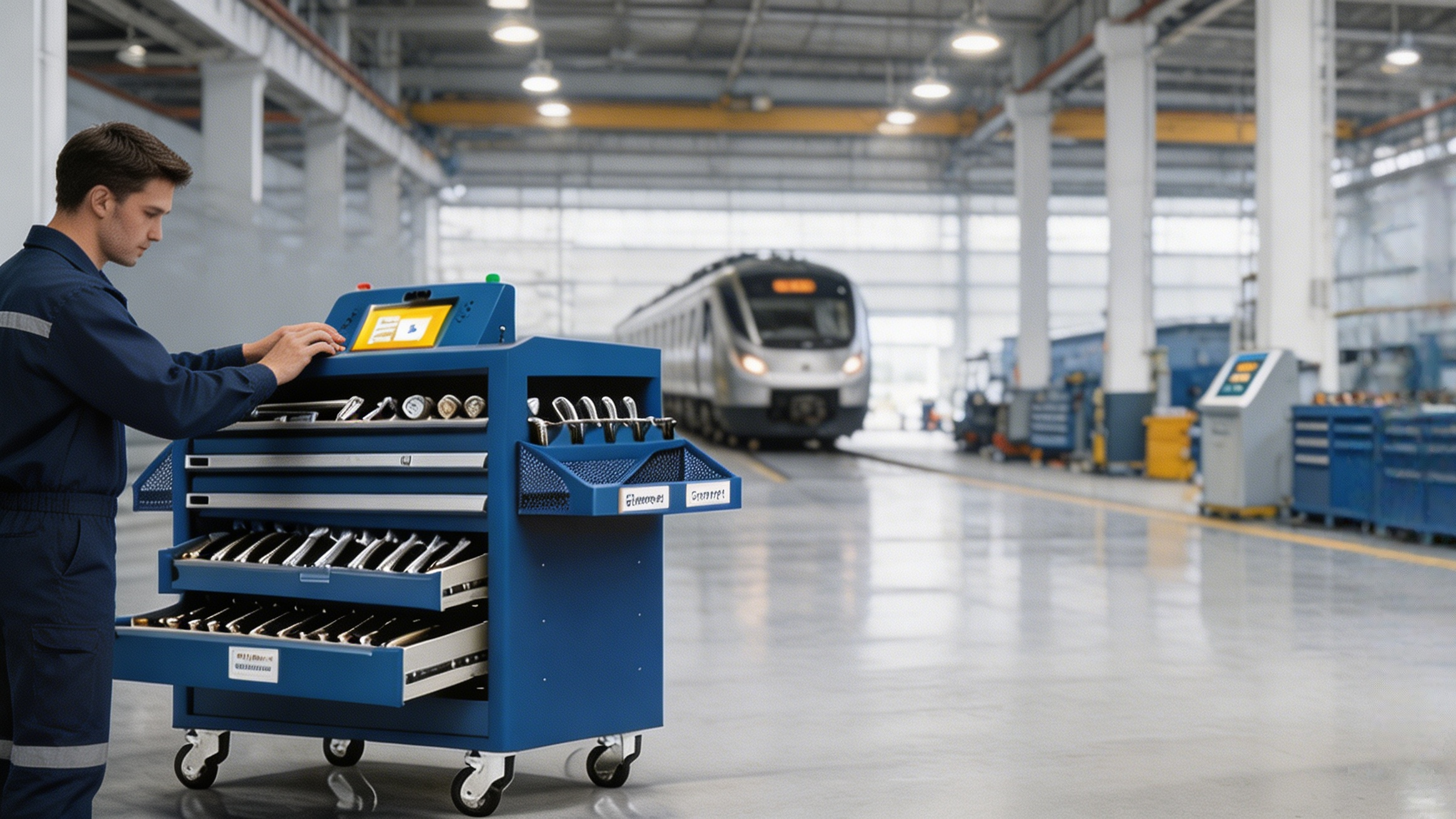
Multiple RFID smart cribs were placed along the depot wall by work zone. Badge or employee ID unlocks authorized access; on close, the system reads tags and logs issue/return. Must-return tool types trigger overdue and door-exception alerts to the duty console.
Light mapping to HR or access card IDs preserved familiar tap habits. Export APIs provide daily/weekly inventory and exception reports for line leads and stores staff.
Implementation notes
- Site survey by zone to place cribs and plan power and network runs
- Tool master data, tag attachment standards, and unified asset coding
- Permission matrix by crew and trade; temporary access via approval
- Two-week pilot with alert channel tuning, then formal handover process